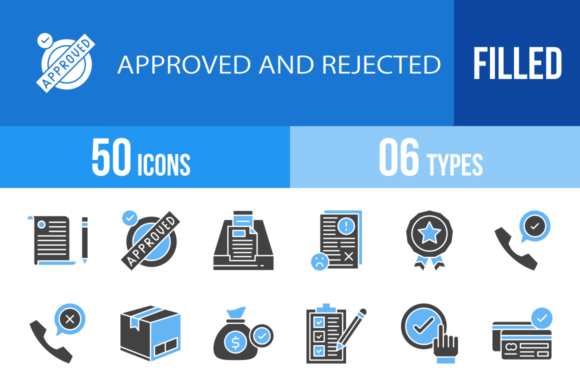
Mastering Visual Communication: A Guide to Flat Multicolor Approved and Rejected Icons
In the fast-paced digital world, clarity is currency. Whether you are designing a mobile banking app, creating a corporate presentation, or developing an e-commerce website, the ability to communicate status instantly is paramount. Users do not want to read paragraphs of text to know if a payment went through or if a file upload failed. They want immediate visual feedback. This is where the power of high-quality iconography comes into play, specifically a robust set of Flat Multicolor Approved and Rejected Icons.
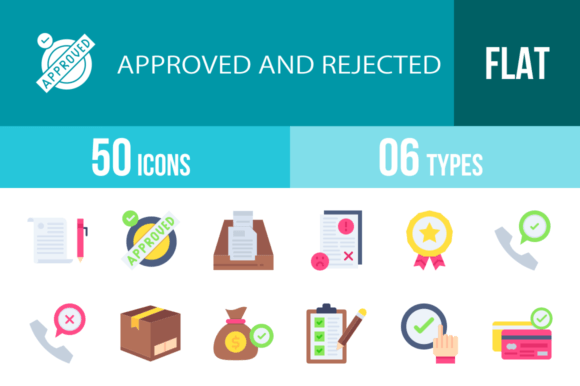
Icons are the universal language of the digital age. They bridge the gap between complex functionality and user intuition. However, not all icons are created equal. To truly enhance user experience (UX) and user interface (UI) design, you need assets that are versatile, scalable, and semantically clear. This article explores the significance of a comprehensive icon set featuring 50 approved and 50 rejected icons, designed for maximum usability across all platforms.
The Psychology of Approval and Rejection in Design
Before diving into the technical aspects of vector graphics and file formats, it is essential to understand the psychological impact of these symbols. The concepts of "approved" and "rejected" are primal. They relate to safety, success, failure, and navigation.
The Green Light vs. The Red Stop Sign
Most cultures associate specific colors with specific outcomes. Green typically signifies "go," "success," or "approved," while red signifies "stop," "error," or "rejected." However, in modern flat multicolor design, we move beyond simple monochrome palettes. By utilizing a unigrid system, designers can create a cohesive visual language where an icon for a Credit Card Approved feels part of the same family as a Laptop Rejected. This consistency reduces cognitive load, allowing users to process information faster.
When a user sees a Thumbs Up or a Checkmark, they feel a sense of relief and accomplishment. Conversely, seeing a Thumbs Down or a Stamp Rejected triggers an immediate alert. In UI design, these icons must be distinct enough to be accessible to color-blind users, relying not just on hue but on shape and symbol to convey meaning.
Practical Applications: Where These Icons Shine
The versatility of a comprehensive icon set lies in its applicability across different industries. Here is how these icons fit into modern workflows:
1. Mobile App Development
Mobile screens are limited in real estate. Text-heavy interfaces are clunky and hard to navigate. Consider a delivery tracking app. Instead of a status bar filled with text, designers can use specific icons to tell the story of a package:
- Cardboard Box / Delivery Box: Represents the item itself.
- Post Terminal / Procedure: Indicates the package is at a sorting facility.
- Delivery Box Rejected: Clearly communicates that a delivery attempt failed or the item was returned.
- Mobile Check: Confirms that the user has successfully signed for the package.
This visual shorthand is faster than reading "Your package could not be delivered." It reduces frustration and improves the overall aesthetic of the application.
2. E-Commerce and Retail
For online stores, the checkout process is a critical funnel. Cart abandonment often happens due to confusion. By integrating icons like Remove From The Cart, Credit Card Approved, or Bad Feedback, designers can guide the user smoothly through the purchasing journey.
Furthermore, product verification is a growing concern. An icon labeled Product Approved or Shield can be used to signify that an item has passed quality control or that a transaction is secure. These visual cues build trust, which is essential for conversion rates.
3. Corporate Presentations and Reports
Presentations often suffer from "death by PowerPoint"—too much text and boring layouts. Using flat multicolor icons can transform a dull slide deck into an engaging visual story. When discussing quarterly results, a presenter might use:
- Good Feedback / Agreement: To highlight successful partnerships.
- Bad Feedback / Rejected: To honestly address areas that need improvement without being overly aggressive.
- Archive / Policy: To discuss compliance and record-keeping.
These icons act as visual anchors, helping the audience retain information long after the meeting is over.
Deep Dive: The Anatomy of the Icon Set
A professional icon set is more than just a collection of drawings; it is a system. This specific collection features 100 vector icons designed using a unigrid system. But what does that mean for you?
The Unigrid System Explained
The unigrid system is a design methodology where all icons adhere to the same grid structure, pixel alignment, and optical weight. This ensures that when you place a Speech Bubble Approved next to a USB Drive Approved, they look balanced. They don't feel like they were stolen from different websites; they feel like they belong together. This professional consistency is crucial for branding.
File Formats for Every Need
One of the most common frustrations for designers is receiving assets in the wrong format. A robust icon set solves this by providing 6 different formats:
- AI (Adobe Illustrator): The industry standard for vector editing. If you need to change the shape of the Slider Tool or adjust the curve of the Globe, this is the file you need.
- EPS: A legacy vector format that is compatible with almost all graphic design software, making it perfect for print shops.
- SVG (Scalable Vector Graphics): The gold standard for web development. SVGs are lightweight and scale infinitely without losing quality, making them perfect for responsive websites.
- CDR: Specifically for CorelDRAW users, ensuring no designer is left behind.
- PNG: Raster images with transparent backgrounds. Essential for quick implementation in Word documents, emails, or social media posts.
- JPG: Useful for previews or contexts where transparency isn't needed and file size must be minimal.
Specific Use Cases: Beyond the Basics
Let’s look at how specific icons from this set can solve real-world problems in user interface design.
Security and Authentication
With cyber threats on the rise, users need to know their data is safe. Icons play a vital role in this assurance.
- Password Approved / Rejected: Essential for login screens. A visual cue next to the password field (green for approved, red for rejected) provides instant feedback.
- Face Recognition Approved / Rejected: As biometric login becomes standard, these icons guide the user through the scanning process.
- Shield: A universal symbol for security, often used on checkout pages.
Communication and Feedback
User feedback loops are vital for product improvement. Whether it is a customer support chat or a rating system, these icons are indispensable.
- Speech Bubble Approved / Rejected: Can be used to indicate whether a message has been sent successfully or failed to deliver.
- Call Approved / Rejected: In VoIP apps or contact centers, these icons indicate call status instantly.
- Feedback / Good Feedback / Bad Feedback: These allow users to rate their experience quickly. A simple click on a Thumbs Up or Thumbs Down is far easier than filling out a survey.
Hardware and Tech
Troubleshooting guides and IT dashboards rely heavily on visual cues to indicate the status of physical devices.
- Laptop Approved / Rejected: Useful for IT asset management software to show which devices are active or decommissioned.
- USB Drive Approved: Indicates a successful file transfer or a safe removal status.
- Mobile Check: Confirms that a mobile device is connected to the network or synced.
Optimizing for Scalability and Usability
A major feature of this icon set is that it is 100% vector-based. Why is this important? Because vectors are mathematical equations, not pixels. This means you can take the Globe icon and scale it from the size of a favicon (16x16 pixels) to the size of a billboard without any loss of quality. The lines remain crisp, and the colors remain vibrant.
Furthermore, the "flat" design style ensures that these icons load quickly on websites. Unlike heavy 3D graphics or shadow-heavy skeuomorphic designs, flat icons are lightweight. This contributes to better SEO performance because page speed is a ranking factor for search engines like Google.
Conclusion: Elevating Your Visual Language
In conclusion, a comprehensive set of Flat Multicolor Approved and Rejected Icons is not just a nice-to-have; it is a fundamental tool for modern digital communication. Whether you are a developer building the next hit app, a designer creating a seamless e-commerce experience, or a manager presenting quarterly results, these icons provide the clarity and professionalism you need.
By utilizing a unigrid system and offering multiple file formats (AI, CDR, EPS, JPG, PNG, SVG), this collection ensures that you are equipped for any platform or device. From the Agreement of a contract to the Archive of old data, from Hired celebrations to the finality of Delete, these icons help you tell your story effectively. Invest in high-quality iconography, and you invest in better understanding, smoother workflows, and a more engaging user experience.