Visual Literacy in the Digital Age: Mastering Communication with Book Day Line Icons
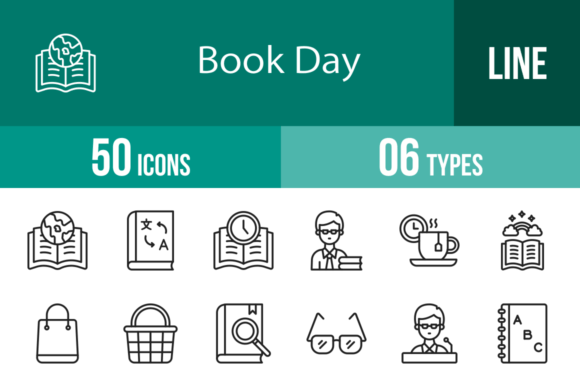
In the modern era of information overload, the ability to communicate quickly and effectively is not just a luxury; it is a necessity. Whether you are an educator designing a curriculum, a developer building an educational mobile app, or a publisher creating marketing materials for World Book Day, visual language plays a pivotal role. At the heart of this visual communication lies the icon. Specifically, the use of Book Day Line Icons has become a standard for conveying complex ideas about reading, education, and literature with just a single glance. This article explores the significance of these visual assets, their versatility across platforms, and how a comprehensive set of icons can transform your creative and professional projects.
The Universal Language of Icons
Before diving into the specific features of a high-quality icon set, it is essential to understand why icons are so powerful. Humans process visual information significantly faster than text. When a user opens an app or views a website, they scan for visual cues to navigate. A well-designed icon acts as a universal translator. It bypasses language barriers, allowing a user in Tokyo to understand the function of a button just as well as a user in New York.
In the context of World Book Day and general education, this universality is paramount. Reading is a global activity. Therefore, the symbols used to represent books, learning, and libraries must be recognizable to a global audience. A "Book" icon, for instance, shouldn't look like a specific cultural artifact that only a few would recognize; it should represent the abstract concept of written knowledge. This is where the concept of "Visual Literacy" comes into play—the ability to interpret and make meaning from information presented in the form of an image.
Anatomy of a Versatile Icon Set: The 50 Book Day Collection
Imagine you are tasked with creating a comprehensive digital library interface. You need icons for different genres, user actions, and administrative functions. A generic "download" icon won't suffice; you need specific imagery that resonates with readers. This is the strength of a dedicated collection, such as a set featuring 50 distinct Book Day Line Icons.
Such a collection is not merely a random assortment of drawings; it is a curated toolkit designed to cover the entire ecosystem of reading and education. Let’s break down the utility of these specific icons into logical categories to understand their practical application:
1. The Core of Reading
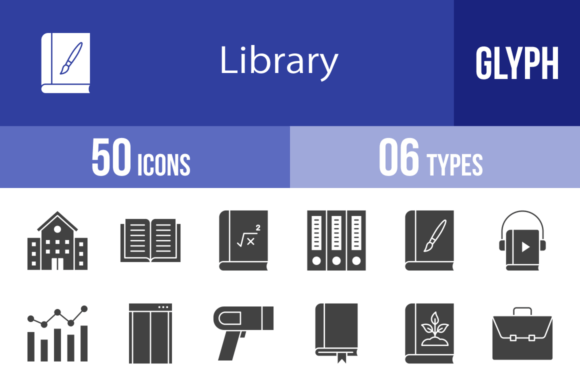
At the foundation of any book-related project are the fundamental icons that represent the act of reading and the physical objects involved. Icons such as the Open Book, Book, and Book Reading are the cornerstones. They are used on buttons to "Start Reading" or as headers for library sections. Furthermore, the Books Stack icon is perfect for representing collections, series, or bundles, while the Book Shelves icon evokes the feeling of a physical library, adding a touch of warmth and familiarity to digital interfaces.
2. Educational and Academic Life
Education is a broad field, and an effective icon set must reflect its diversity. Consider the student journey: it often begins with a Primary Book and progresses to specialized subjects like Biology Book, Physics Book, and Maths Book. These subject-specific icons are invaluable for educational platforms that need to categorize courses visually.
As students advance, the symbolism shifts. A Degree icon represents achievement, while a Professor or Teacher icon signifies mentorship. For the modern student, the Online Course and Online Learning icons are essential, bridging the gap between traditional academia and the digital classroom.
3. The Digital Transformation of Literature
Reading has moved beyond paper. We now consume content through Audio Book platforms, read PDF documents on tablets, and access a Cloud Library from anywhere in the world. Icons representing these digital formats help users instantly identify file types and access methods. For example, a Global Education icon can symbolize the accessibility of knowledge across borders, a key feature of modern e-learning platforms.
4. Engagement and Interaction
How do users interact with books? They search for them, save them, and share them. A Search Books icon is vital for navigation, while a Favorite Subject or Heart icon allows users to curate their personal libraries. The Book Idea and Imagination icons are perfect for representing brainstorming sessions, creative writing tools, or inspiration sections within an app.
Furthermore, the commerce side of reading is covered with Book Store, Shopping Basket, Shopping Bag, and Book Discount icons. These are essential for e-commerce websites selling physical books or digital subscriptions.
The Technical Foundation: Why Format and System Matter
While the aesthetic of an icon is important, its technical construction determines its usability. A beautiful icon that pixelates when scaled up, or cannot be edited to match a brand color, is useless. This is why professional designers look for specific technical features, such as those found in high-quality vector sets.
The Unigrid System
Consistency is the hallmark of professional design. When icons are designed using a unigrid system, they share the same optical size, stroke weight, and corner radius. This means that if you place a Notebook icon next to a Calendar icon, they will look like they belong together. This systematic approach ensures that your UI (User Interface) looks cohesive and harmonious, rather than disjointed and amateurish.
Vector Scalability
The most critical technical feature of modern icons is that they are 100% vector. Vectors are mathematical equations rather than pixels. This allows an icon to be scaled from the size of a favicon (16 pixels) to the size of a billboard without losing quality. Whether you are printing a flyer for a school event or displaying a header on a 4K monitor, vector icons remain crisp and clear.
Format Versatility
A robust icon set must be adaptable to different software environments. A set that offers 6 different formats—typically AI (Adobe Illustrator), CDR (CorelDRAW), EPS (Encapsulated PostScript), JPG (Joint Photographic Experts Group), PNG (Portable Network Graphics), and SVG (Scalable Vector Graphics)—ensures maximum compatibility.
- AI and CDR: These are native file formats for professional design software, allowing for deep editing of anchor points and paths.
- EPS: A universal vector format that works across almost all design platforms.
- SVG: The gold standard for web development. SVGs are lightweight, scalable, and can be manipulated with CSS code, making them ideal for mobile apps and websites.
- PNG: Essential for users who need transparency and do not have access to professional vector software.
Practical Application: Bridging the Gap Between Concept and Reality
Understanding the list of icons and their technical specs is one thing; applying them is another. Let’s look at how these icons solve real-world problems in different industries.
In Education and Schools
A teacher creating a "World Book Day" poster needs to make it engaging for children. Instead of just text, they can use the Story Book icon to designate the fiction section and the History Book icon for non-fiction. The Badge and Book Award icons can be used to create certificates for reading achievements, motivating students through visual recognition.
In Mobile App Development
Consider a developer building a study-planning app. The user interface needs to be intuitive. They can use the Time To Study icon for the timer function, the Book Pen icon for the note-taking feature, and the Exchange icon for file sharing. Because these icons are designed for maximum usability, they reduce the cognitive load on the user, making the app easier and faster to use.
In Marketing and Social Media
For a bookstore running a promotion, visual consistency is key. They can use the Book Discount icon in their email newsletters and the Best Seller icon on their website headers. The Content Creator and Tea Break icons add a human touch to social media posts, encouraging followers to share their reading habits. The ability to edit these vectors means the store can change the line color to match their specific brand palette instantly.
Enhancing User Experience (UX) with Semantic Clarity
One of the common misunderstandings about icons is that they are merely decorative. In reality, they are functional elements of User Experience (UX) design. A good icon reduces the need for text labels, saving screen real estate—crucial for mobile apps where space is limited.
However, clarity is paramount. An icon must be semantically clear. If an icon is too abstract, the user won't understand it. The icons listed in the Book Day collection—such as Reading Glasses, Translation Book, and Contact Book—are based on common metaphors. Most people associate "glasses" with reading or correction, and a "globe" with translation or global education. By using these established visual metaphors, designers ensure their products are accessible to beginners and experienced users alike.
Conclusion: The Power of Preparedness
Whether you are a seasoned graphic designer or a teacher with basic computer skills, having access to a comprehensive, high-quality set of icons is a game-changer. The 50 Book Day Line Icons represent more than just images; they are a toolkit for better communication. By leveraging the unigrid system for consistency, utilizing vector formats for scalability, and applying semantic imagery for clarity, you can elevate your projects from simple text documents to professional, engaging visual experiences.
In a world that is increasingly visual, these icons help us celebrate the written word, promote education, and navigate the vast libraries of the digital age. They remind us that while technology changes, the core human activities of learning, reading, and sharing knowledge remain constant. By integrating these tools into your workflow, you ensure that your message is not only seen but understood, instantly and universally.