50 Sailor Glyph Icons: A Practical Toolkit for Nautical Design
When a project calls for a maritime theme, finding cohesive, high-quality visual assets can be a time-consuming challenge. The 50 Sailor Glyph Icons collection presents itself as a focused solution, offering a set of vector graphics built around a unified nautical concept. This article examines its features, practical applications, and potential value for various creative and professional workflows.
Core Characteristics and Design Philosophy
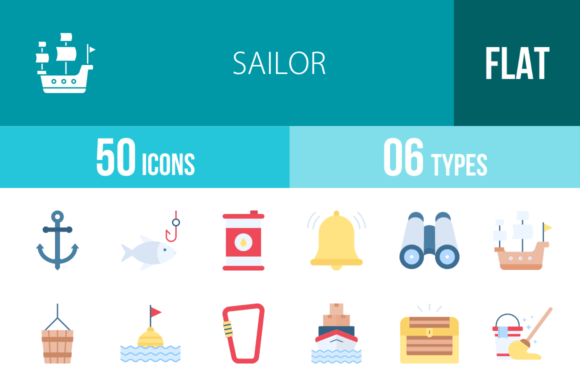
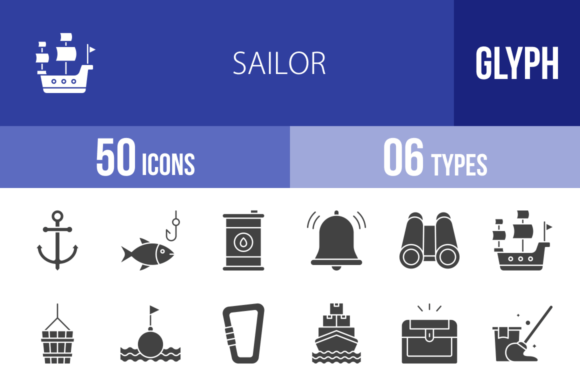
At its foundation, this icon set is designed for versatility. Each of the 50 icons, ranging from an Anchor and Compass to a Submarine and Treasure Map, is crafted using a unigrid system. This approach ensures visual consistency in line weight, corner radius, and overall proportions, which is crucial for maintaining a professional appearance when multiple icons are used together. The set is described as containing 100 vector icons, likely indicating variations or different states within the core 50 themes.
The practical strength lies in its delivery. The icons are provided in six industry-standard formats: AI, CDR, EPS, JPG, PNG, and SVG. This breadth of file types means the assets are immediately usable across a wide spectrum of software, from Adobe Illustrator and CorelDRAW for detailed editing to web development environments that utilize SVG for scalable graphics, and presentation or document software that might prefer PNG or JPG. This multi-format approach is a significant time-saver for teams where different members use different tools.
Evaluating Real-World Usability and Flexibility
The true test of any design resource is how it performs in practice. The 50 Sailor Glyph Icons are positioned as ready for use on all devices and platforms, which speaks to their core utility. The vector formats (AI, CDR, EPS, SVG) ensure the icons can be scaled to any size—from a tiny favicon to a large print banner—without loss of quality. This scalability is non-negotiable for responsive web design and high-resolution print projects.
For a web developer, the SVG format is particularly valuable. It allows for crisp rendering at any screen density, easy color manipulation via CSS, and smaller file sizes compared to bitmap images. A designer creating a mobile app could use the Life Buoy icon for a "help" section or the Compass for a navigation menu, confident that the icons will integrate seamlessly. For print designers, the EPS or AI files offer full editability, allowing them to adjust colors to match a specific brand palette or modify a path if needed for a unique layout.
Strengths and Practical Applications
The collection's primary strength is its thematic cohesion. Instead of searching for disparate nautical icons from various sources, which often leads to mismatched styles, this set provides a unified visual language. This is invaluable for creating polished, professional materials quickly. Consider these practical scenarios:
- Website or Blog Theming: A travel blog focused on sailing or coastal destinations could use icons like Sailor, Lighthouse, and Seagull to enhance categories, dividers, or feature lists.
- Mobile App UI: An app for boaters or fishermen could leverage Fishing Rod, Radar, and Weather (represented by Wind or Raincoat) icons for intuitive, on-brand navigation.
- Marketing and Presentation Materials: A corporate presentation for a logistics company with a maritime division could use Cargo, Container, and Propeller icons to visually reinforce key points without resorting to generic clip art.
- Educational Resources: Teachers creating materials about oceanography, history, or literature (e.g., Moby Dick) could find icons like Harpoon, Diving Helmet, and Message In A Bottle useful for engaging visual aids.
The inclusion of less common icons like Carabiner, Pulley, and Tool Box expands its utility beyond pure aesthetics into more functional representations for sports, technical, or safety-related content.
Who Stands to Benefit Most?
This icon set is particularly well-suited for professionals and creators who regularly produce content or products with a nautical, travel, adventure, or maritime industry focus. This includes:
- Freelance Designers and Agencies: Having a reliable, editable set like this in a toolkit can streamline client projects, reducing time spent on sourcing and modifying assets.
- Small Business Owners: Those in sectors like boat rentals, fishing charters, coastal real estate, or marine supply can create cohesive branding and marketing materials in-house.
- Content Creators and Bloggers: Enhancing articles, social media graphics, and newsletters with consistent, relevant icons can improve audience engagement and professionalism.
- Educators and Publishers: Developing worksheets, interactive modules, or book covers that require clear, thematic illustrations.
- App and Web Developers: Building user interfaces for niche applications where standard icon libraries may lack specific maritime metaphors.
Considerations and Potential Limitations
While the set appears comprehensive, potential users should consider its stylistic scope. "Glyph" icons are typically simple, monochromatic, and symbolic. They are excellent for clarity and scalability but may not suit projects requiring highly detailed, realistic, or colorful illustrations. The style is functional rather than artistic.
Another consideration is the exact count and variation. The description mentions both "50 Sailor Glyph Icons" and "100 vector icons." Prospective users should clarify whether the 100 figure refers to alternate versions (e.g., filled vs. outline styles) of the 50 core subjects. This detail is important for understanding the full range of creative options available.
Finally, as with any pre-made asset, the icons will require thoughtful integration. They are a starting point. The most effective use will involve pairing them with complementary typography, color schemes, and layouts that align with the project's specific goals and audience.
Final Assessment
The 50 Sailor Glyph Icons collection offers a practical, well-structured resource for anyone needing consistent nautical visuals. Its value is derived from its thematic focus, vector-based scalability, and broad file format compatibility, which together support a efficient workflow across digital and print media. It is not a limitless library, but a targeted toolkit. For projects where a maritime theme is central, it provides a foundation of assets that can enhance professionalism, improve user experience, and save considerable design time. When evaluated against the specific needs of a project, it presents a compelling option for creators and professionals seeking reliable, editable, and cohesive iconography.