Freshen Up Your Projects with Handmade Fruit Clipart
There is a specific kind of visual fatigue that sets in when you see the same stock photos of fruit repeated across every blog post and social media graphic. You know the ones: the glossy, perfectly symmetrical apple floating against a stark white background. While functional, they often lack the warmth and personality required to make a design truly connect with an audience. This is where the value of fruit clipart, particularly those created with traditional media, becomes undeniable. It bridges the gap between digital convenience and the authentic texture of hand-drawn art.
The Unique Appeal of Alcohol Marker Illustrations
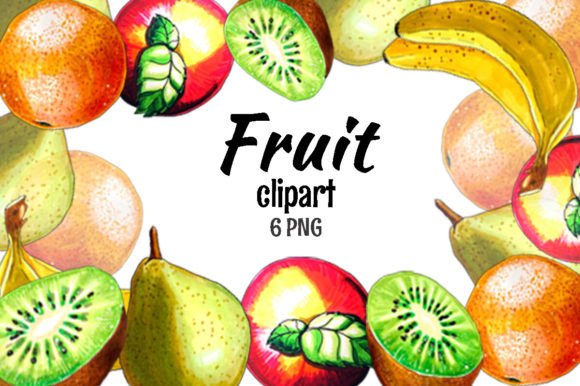
When we talk about high-quality graphics, "high resolution" is usually the first metric discussed. However, the medium used to create the art is just as critical. This specific collection of fruit clipart was created using alcohol markers, a medium beloved by illustrators for its vibrant, saturated colors and fluid blending capabilities. Unlike vector graphics that can sometimes feel sterile or overly geometric, marker-based art retains the nuance of the human hand. You can see the slight streaks in the shading, the layering of color that creates depth, and the organic imperfections that make a pear look like a pear, not a 3D render.
The set includes six distinct elements: a pear, kiwi, apple, orange, banana, and a grouping that brings them all together. The visual consistency is key here. Because all items are drawn with the same medium and style, they function as a cohesive system. You can use them individually as accent pieces or combine them to create a rich, fruity tableau without worrying about clashing art styles. The high resolution of 3000 x 3000 pixels at 300 DPI ensures that these images remain crisp even when printed at 10x10 inches, making them versatile enough for both digital screens and physical merchandise.
Practical Applications for Professionals and Creatives
The utility of this fruit clipart extends far beyond simple decoration. For content creators and bloggers, these images are a lifesaver for breaking up long blocks of text. A strategically placed banana or orange slice can draw the reader's eye down the page, improving engagement and time-on-site metrics. In the realm of food blogging or recipe sites, these graphics serve as excellent visual separators between ingredients and instructions, or as playful icons for category headers like "Desserts" or "Healthy Snacks."
For those in the commercial space, specifically entrepreneurs and small business owners, the applications are tangible and profitable:
- Packaging and Branding: If you sell homemade jams, baked goods, or health foods, this clipart can be integrated directly into your label design. The handmade aesthetic suggests "artisanal" and "natural," which are powerful selling points.
- Marketing Materials: Flyers for a local farmer's market, social media ads for a smoothie bar, or posters for a school nutrition program benefit from the approachable, friendly vibe of marker art.
- Merchandise: The 300 DPI resolution makes these files perfect for print-on-demand services. They look fantastic on tote bags, t-shirts, and greeting cards.
Optimizing Your Workflow with Digital Assets
One of the most significant advantages of using pre-made fruit clipart is the efficiency it brings to the design process. Creating high-quality illustrations from scratch requires skill, expensive supplies, and time. By utilizing an instant download set, you are effectively outsourcing the illustration phase while retaining full creative control over the composition.
The files are delivered in RGB PNG format with transparent backgrounds. This is a crucial technical detail. The transparency allows you to layer these fruits over any background color, texture, or photograph without the hassle of masking or removing white boxes. Whether you are designing a complex scrapbook page in Photoshop or arranging a simple layout in Canva, the "plug-and-play" nature of PNGs saves valuable time. For digital scrapbooking and planner enthusiasts, these elements add a tactile feel to digital journals that standard digital stickers often lack.
Considerations for Print and Fabric
If you are planning to use this fruit clipart for decoupage or fabric prints, the quality of the source file is paramount. The 300 DPI specification means there is enough data in the image to produce a sharp print on paper or card stock. When transferring to fabric, the saturation of the alcohol markers translates well to CMYK printing processes, retaining much of the original vibrancy. For paper crafts, such as handmade invitations or scrapbooking, the 10x10 inch size gives you plenty of room to scale down without losing detail, but also enough resolution to crop in tight on a specific fruit if you need a close-up accent.
Evaluating Quality and Authenticity
When sourcing fruit clipart for professional or personal use, it is worth scrutinizing the texture. Generic vector fruits often have flat gradients that feel artificial. The strength of this specific style lies in its imperfections. The bleed of the marker ink and the texture of the paper it was drawn on provide a "handmade" authenticity that resonates with modern design trends favoring organic and natural aesthetics. This is particularly relevant for educators creating classroom materials; the friendly, hand-drawn style is less intimidating and more engaging for young learners than sterile corporate graphics.
Ultimately, this collection is designed for the maker—the person who wants to add a splash of color and personality to their projects without needing a degree in fine arts. Whether you are a freelancer designing a menu for a client, a hobbyist making birthday cards for friends, or a publisher looking for chapter headers for a cookbook, these graphics provide a polished, professional look with a personal touch. They are not just images; they are tools for better visual communication.